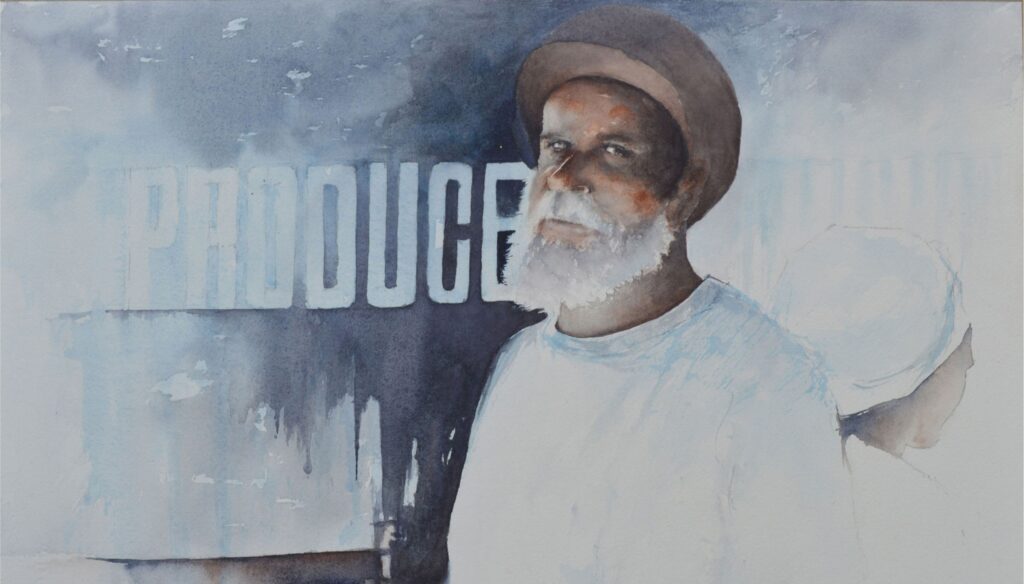

TUTORIAL – Painting with gouache by David Harrison – Part one: the basics
Since leaving art school (a few years ago), I have experimented with charcoal, graphite, pastels, oils, acrylic, mixed media and gouache (pronounced: gwash).
I think that it is important for artists to experiment and try out different media and techniques, and to be continually challenged in terms of subject matter which enable us as artists to get out of our own zone of comfort. I feel this is the only way that we will each develop as an artist.
Drawing and painting are not easy. Both can be frustrating as we strive for a perfection, which always seems to be just out of our reach. Of course, we will never achieve perfection, but tomorrow I will try again and might just get it right!
What is the difference between watercolour and gouache?
Watercolour and gouache appear to be very similar in appearance.
The main difference between the two mediums lies in their opacity. Watercolour is more translucent, meaning that when watercolour is applied to the white paper, any drawing underneath will be still be visible. When a layer of gouache is applied the paper doesn’t show through as much.
Unlike watercolour, gouache leaves a matte finish.
Despite these differences watercolour and gouache have very similar properties. They have similar pigment and water soluble binder – Gum Arabic. The opacity of gouache is due to the higher density of pigment to binder. The cheaper gouache contains chalk, which can cause stripes and smearing.
One of the other main differences between watercolour and gouache is that gouache dries much quicker. Watercolour dries much slower which makes it less controllable. Do you remember the paints we used from a pot at school? Well, that was a form of gouache. But of course it was not such a high quality of paint as the gouache that we are able to purchase from art shops today.
Materials
An exploration of different brands of gouache
Gouache like watercolour is sold in tubes. There are many brands on the market.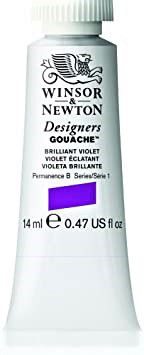
The old adage is very true – use the best quality materials which you can afford.
I have found from experience that Daler Rowney’s student range of gouache has a lot of chalk included and gives a chalky look to a painting.
Holbein gouache uses no chalk to whiten it, and achieves its fantastic opacity with a high density of pigment .
Windsor & Newton designers gouache, which has been manufactured since 1935 is my favourite. The range offers an array of high quality vibrant and dense colours.
There are many brands on the market so experiment. At the end of the day, it is down to a matter of personal choice.
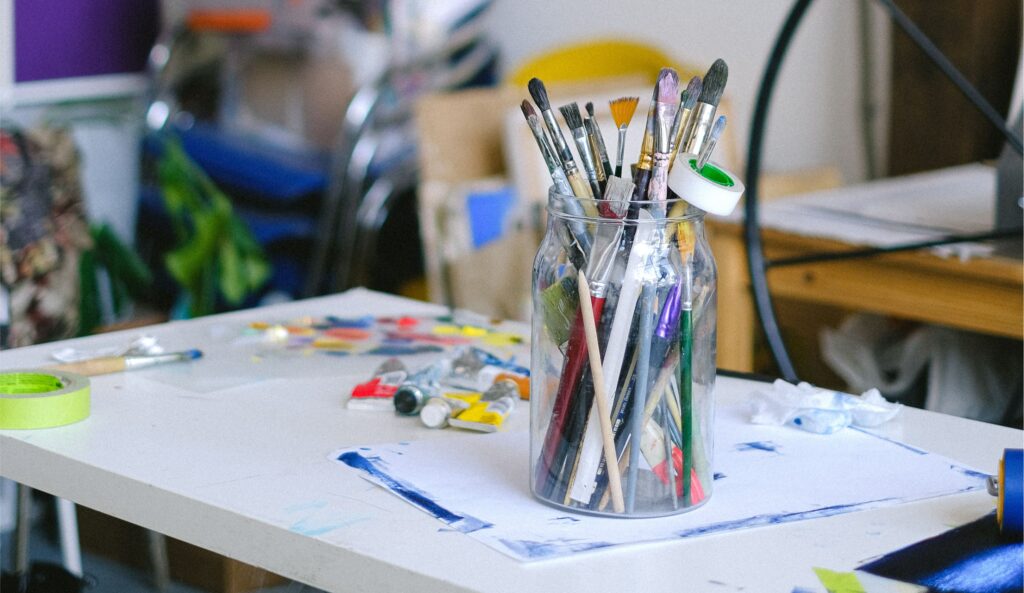
What brushes are suitable?
At the start of a painting I use large brushes and work towards smaller brushes as I proceed.
I use gouache in a similar way as acrylic and so I often use bristle brushes to paint the broad areas and shapes at the beginning, and then I use water colour brushes. Numbers 6 and 8 round are great. But in art there are no rules – it is purely a personal choice.
Paper for gouache
I don’t stretch paper. Instead I generally use Arches acid free heavy weight paper 300lb (not) I find that this paper can absorb a lot of water without buckling. It is made from cotton rag which makes it very strong.
Characteristics of gouache
- Gouache can produce bright and luminous paintings.
- It has the qualities of watercolour and acrylic paint.
- It dries to an opaque matte finish, dries quickly and doesn’t reflect light.
- Mistakes can easily be rectified by rewetting to correct any errors ie lifting.
- You can use watercolour and gouache together in a painting.
- Dark gouache colours dry lighter, whilst lighter colours dry darker.
- You can reactivate dry gouache paint on your palette.
Gouache painting techniques
Painting with gouache as opposed to watercolour can quite often be tricky.
You have to put aside the techniques which you have previously learnt to control watercolour.
Always let the base layer dry before proceeding with further layers
Dry brush technique (or scumbling): I enjoy using the dry brush technique which is used in acrylic and oil painting. This technique is great to produce texture, highlights and background effects. To do this, wipe off most of the paint from the brush with a tissue, and drag the brush over the painting area with a light touch.
Glazing: Water is applied to the paint on the palette to dilute it and is then layered onto existing dry paint.
Opaque Layers: Simply add less water to the paint, great for example to create cloud effects and texture.
Blending: Fingers can be quite handy to blend with!
Top tips when using gouache
- Try not to think of gouache as watercolour. Don’t use too much water and let the base layer dry before further applications.
- Try to buy the best brands (that don’t include chalk), and try using only the primary colours to start with.
- If you mix up too much paint on your palette don’t worry – you can reuse it by simply adding water and remixing it.
- Experiment with different techniques, such as dry brush.
- The most important thing is to have enjoyment in painting. I find it’s best not to overthink what you are doing (not difficult for me!) Painting is a very intuitive process so if you are new to gouache and want to give it a try, relax and enjoy!
Famous artists who have used gouache
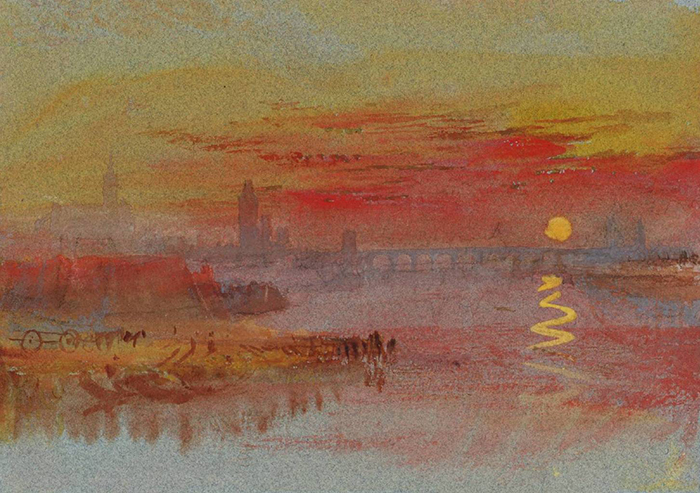
- J.M.W. Turner
- Henri Matisse
- Edgar Degas
- Egon Schiele
- Paul Klee
- Odilon Redon
- Jackson Pollock
- Marc Chagall
- Pierre Bonnard
Part II of this tutorial can be found here