
RESOURCE – 5 tips for a great watercolour from Surinder Beerh
Sketching
I am a great believer in sketching. Without a proper drawing /sketch it is difficult to produce a good painting. If you do not get the drawing right in the initial stage then it will be difficult to make changes whilst you are painting.
Try a small sketch and ensure you have what you want in a painting.
Produce a tonal sketch with a pencil. I use 2B. Observe where the light and the dark tones are. Squint your eyes. Once you have done the tonal sketch you will find it easier when you paint the picture in watercolour. Buy decent drawing pencils
Remember in any painting there are three areas -the sky, the background and the foreground, so keep it simple.
Paper and brushes
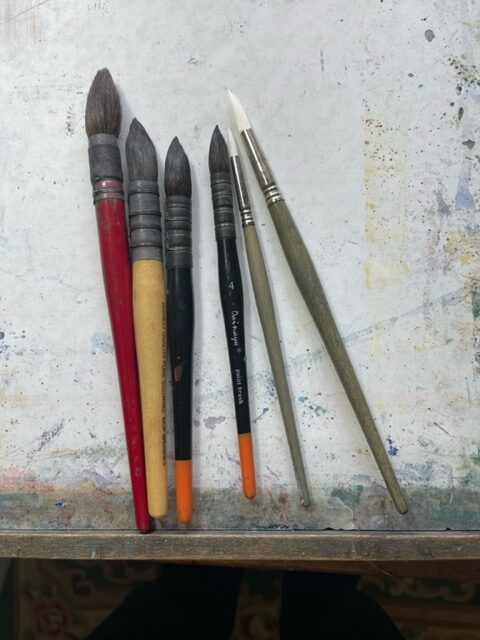
If you want to paint big paintings then it is very important to use big Mop brushes. To cover a larger area one needs larger mop brushes to paint quickly. One sees some painters using small brushes for large areas of painting. I do not think it ever works. Be bold and paint with a larger brush and your painting will improve. For detail use small brushes. I use synthetic brushes from Escoda for detail. Rosemary&Co has an excellent selection of brushes.
Selection of paper is very important in watercolour in my opinion. No good getting cheap watercolour paper if you want to produce a quality painting. I did not listen to my first tutor early enough and found it the hard way after three years. I now mainly use Saunders Waterford and Arches. Weight of paper is important too. Try out different weights. I usually use 300gsm/140lb or 425gsm/200lb. I like a rough surface.
Composition
When I first draw out my sketch, I work out what is needed in a painting. I usually have photos for reference purposes. You cannot paint everything in a photo. Use a view finder to identify what you want to paint.
Ensure you know the rules of thirds and where your focal point is. Do not create competing focal points otherwise the eye wanders all over the painting.
Connect things in paintings. Use ropes, people, poles etc. Do not leave big gaps in a painting.
Technique
Tones are important, therefore darks and lights in each painting is essential.
Start with light tones and then gradually put the darks in.
For pure white either leave the whiteness of the paper or use masking fluid
Limit your palette. Try and stick to 3/4 colours. Brings about harmony in a painting.
Wet in Wet is a what I do a lot of. This requires timing. It takes practice and patience to develop this technique.
Use of Gouache/ Watercolour white to highlight figures.
Summary
There is no substitute for plein air painting. You will learn a lot. Enjoy the surroundings, feel the light and observe things.
Be quick when painting watercolour outside. Use a water spray to keep your painting moist.
Paint what you like. If you don’t like a subject then you will not produce a good painting.
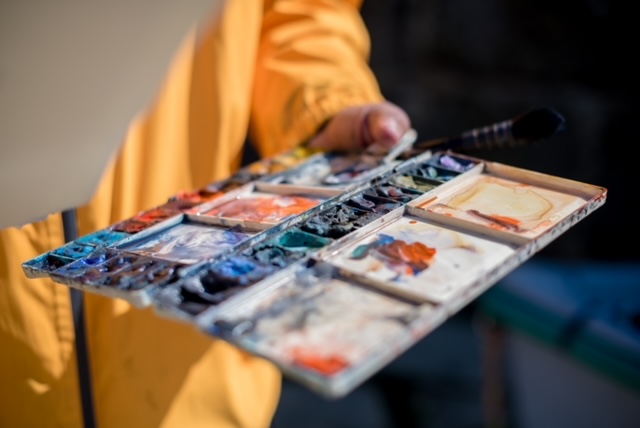
Always have more paint than you need. The big mistake is never to mix enough paint at the start. Once you have run out of the paint it is all over because the next mix will never be the same as your previous mix. Always have a couple of paint wells ready before you start the painting.
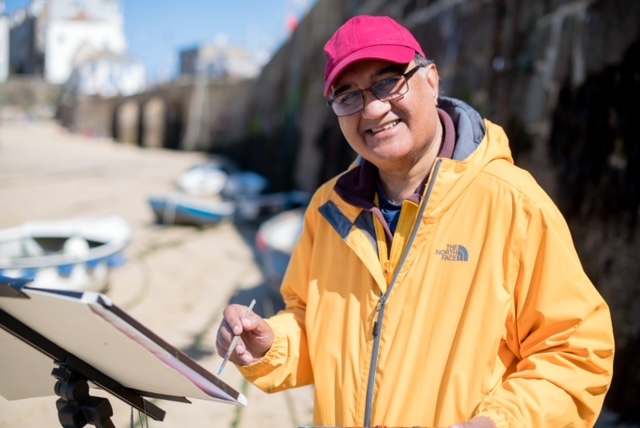
The most important lesson to learn is ENJOY and let go. After all it is only a piece of paper.