TIPS – Correcting mistakes in watercolour by Anthony Osler
We all make mistakes when we are painting. One only has to see an X-ray of an Old Master’s painting to see how many alterations were made during the production of the work. But, of course they were painting in oils, easy to correct, as opposed to our chosen medium which requires a great deal more skill!
To some extent the ability to correct a mistake will depend on the paper you are using and the pigments employed or the manufacturer of your paints. Some colours stain more deeply than others and some papers stain more readily.
Soaking and dabbing
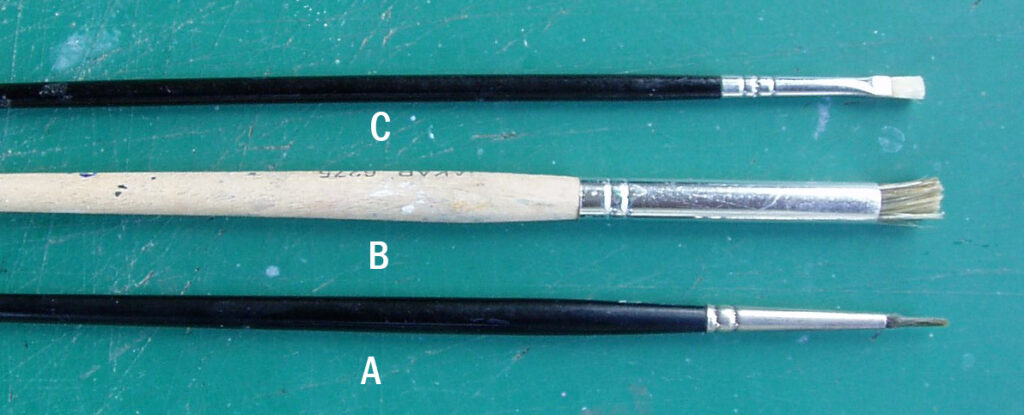
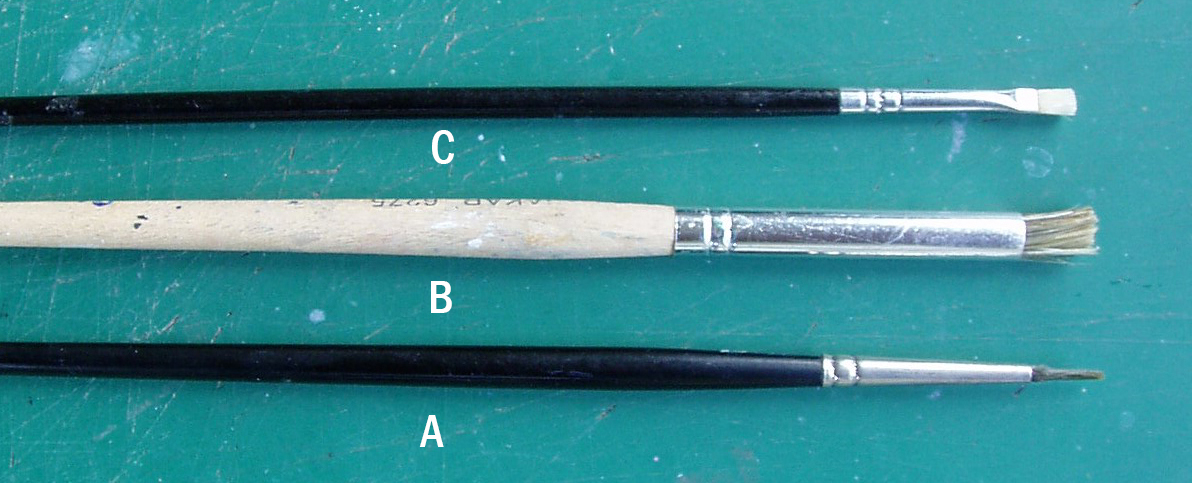
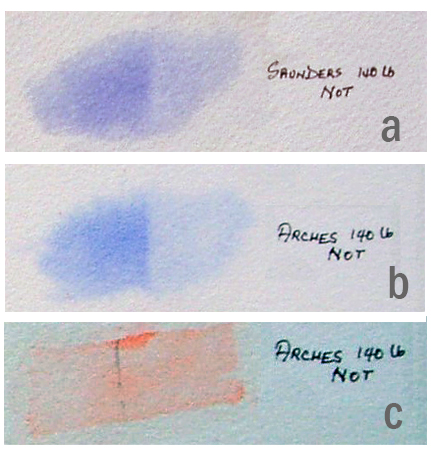
In Figure 1a I have put some W&N French ultramarine onto wet Saunders paper, let it dry naturally, and then tried to lift it off by soaking it on the right hand side for about half a minute and then dabbing with kitchen roll. I then did the same thing with Arches paper (1b), and you will see that the Arches comes out a little better. When dabbing, by the way, don’t press too hard or you will push pigment deeper into the paper and make it impossible to remove. Very small patches can often be tackled using an old watercolour brush, maybe cut down a bit, and using a pushing movement. See the brush A in the brush illustration.
In Figure 1c I tried to remove a patch of Coral Orange by leaving it to soak for 5 minutes, adding fresh water from time to time. I then dabbed away with kitchen roll, but the paper was well and truly stained. On the left hand side of the colour, it shows where I scrubbed it with the bristle brush. The paper stood up to it well but most of the stain remained. Conclusion? Don’t soak for too long.

Lifting off with various tools
Figure 2a shows Rose Madder being attacked with a stiff fine bristle brush (brush B). Most of the colour was removed but the surface of the Saunders suffered damage. However, I tried painting over the damaged rough patch and it was OK and barely showed. Have a look at the right hand side of the Saunders example above. The Arches (2b) survived undamaged. Fellow member Alan Noyes sometimes uses one of these brushes on fairly large areas of his work. Brave man!
Figure 2c shows two masts against a green background. These were done using two strips of mountboard held firmly and very closely together and gently scrubbing away with a very small flat oil bristle, (brush C).
Figure 2d in cadmium red deep show scraping out with a craft knife on the right and using card strips on the left. I know which one I prefer!
Experimenting with gouache
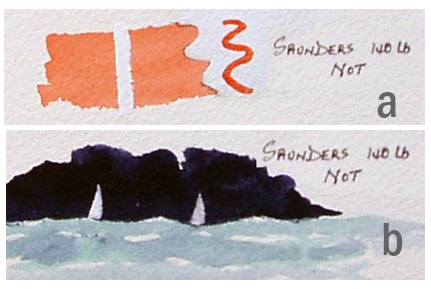
Every artists palette should include a tube of white Designers Gouache! Used carefully and with practice it can save the day! Figure 3a is a patch of Old Holland Coral Orange with white gouache easily covering the colour. The Saunders paper is a very pale cream, and it would have been possible to emulate this with the addition of a little Naples yellow. On the right I have put a squiggle of Coral Orange over the gouache. The gouache takes the colour quite well. Incidentally, the Arches paper is virtually a perfect match for the white gouache.
Gouache works well against a dark colour as can be seen in the left hand shape in Figure 3b. The shape on the right shows the scraping out version using the point of a craft knife. The late Gerald Ackerman RI used to do the tips of waves like this, but it is risky and the paper is permanently damaged. The paper must be totally dry before attempting this. I have used it very occasionally on a dark sea but usually use a little gouache, sometimes with a hint of viridian green.
Finally, two points.
Before correcting a small mistake, carry on and finish the painting. You may find that you have covered up the error with an additional wash, or it is barely noticeable anyway and you may not want to take the risk of trying to correct it! Secondly, don’t labour away at a picture that plainly isn’t working, becoming increasingly frustrated with errors you may have made. In life we sometimes have to say sorry for the mistakes we have made, so say sorry and goodbye to your lovely piece of expensive watercolour paper and start again!