TUTORIAL – Sue Downie on Composition
One piece of advice I have found very useful is to plan the tonal structure of the painting before you start to paint. So think about what you are about to paint, squint at it and make a three value notan. The concept and word notan comes from Chinese/Japanese and refers to the balance of black and white. I usually use a 3 value notan because most of the best paintings have areas of dark, light and mid tone. Often one tone is dominant.
It can be difficult to distinguish different tones, often our eyes are tricked by colours. Using a photo can be very helpful although with time and practice you can usually train yourself to see the different tones.
Materials list
Brush-pens in black and grey. White sketching paper. Camera
Step one
Take a photo of what you want to paint
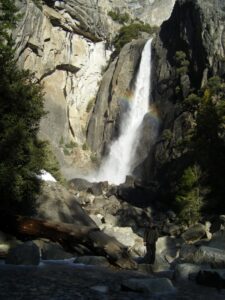
This is a photo I took in Yosemite.
Step two
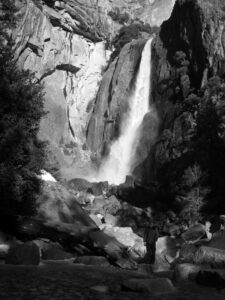
Convert it to black and white
Step three
Posterise it reducing detail and reducing to 3 values or tones
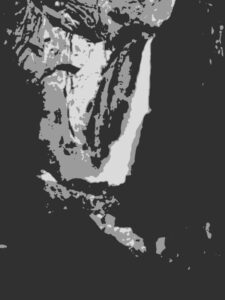
Most photo programmes will do this. I use Picasa but sadly Google photos which has superseded it doesn’t have a posterise function
Once you have your posterised photo, have a look at what could be improved upon. I wanted a clear sky at the top and a contrast between the dark of the right lower half of the painting and lightness on the left. I felt the the tree was the focal point and so I darkened the background and lightened the tree.
I used brushpens to draw a tonal sketch or notan.
Keep the notan small about 2x3cm. Keep the shapes simple. Keep it quick.
Block in the dark tones with the black brushpen. Don’t draw outlines just block in. Then block in the grey tones. Use the white of the paper to be the lightest tone. Try out different notans for your composition.
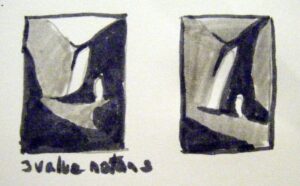
Once you start painting the work done on the notan makes a huge difference. I have been more satisfied with my paintings and end up with less in the wastepaper basket.
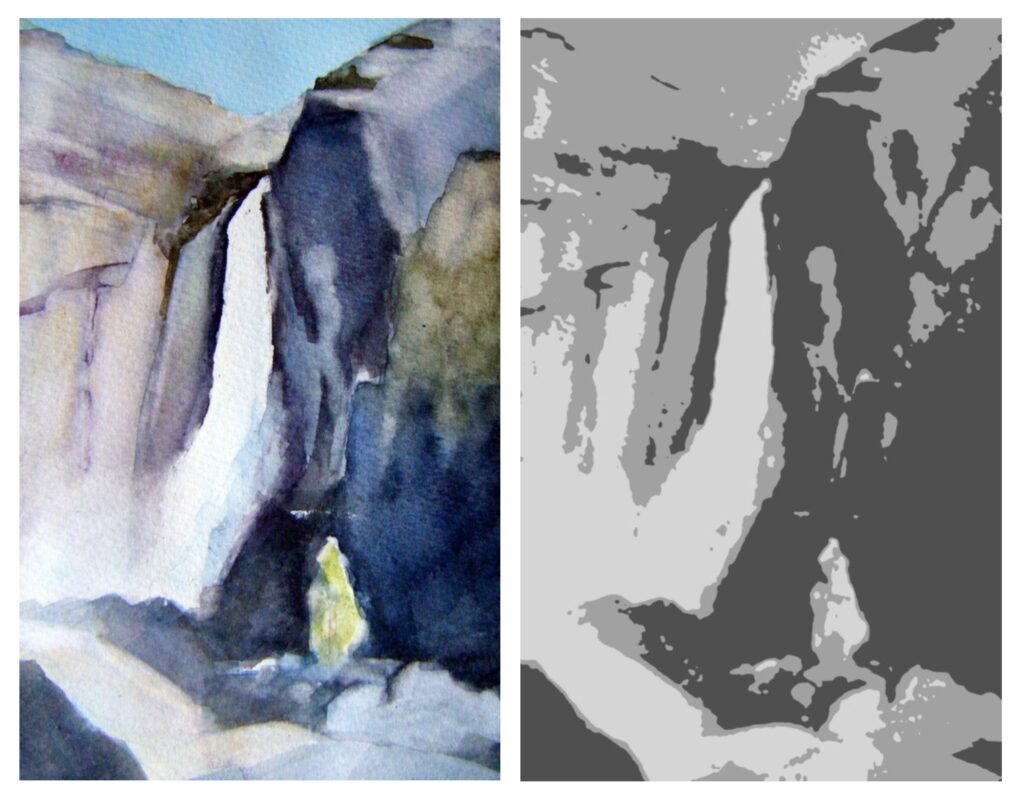
Final painting with a posterised version next to it to show how close it is to the notan
Acknowledgement
I have learnt this technique from Barry Raybould and the Virtual Art Academy.